


How to Avoid Real Estate Risk Portugal for Smart Investors
- Melissa Gonçalves
- Oct 14, 2025
- 10 min read


Portugal’s real estate market has caught the eye of international investors, with Lisbon property prices soaring over 8 percent in just one year. Many expect Portugal’s sunny beaches and investor-friendly policies to guarantee easy profits. But data shows regional prices shift wildly and regulations change fast. That means smart buyers who want steady returns must look deeper than the headlines and rethink what risk really looks like in this fast-changing market.
Table of Contents
Quick Summary
Key Point | Explanation |
1. Conduct Thorough Market Research | Access reputable reports to understand local real estate dynamics across cities and regions. |
2. Understand Legal Frameworks | Get familiar with foreign investment regulations and legal requirements in Portugal to avoid compliance issues. |
3. Consult Local Financial Experts | Engage with experienced advisors to refine your investment strategy and address financial risks. |
4. Diversify Investment Approaches | Spread investments across different property types and locations to mitigate risk and enhance returns. |
5. Monitor Performance Regularly | Implement a system for ongoing assessment of your investment metrics to adapt to changing market conditions. |
Step 1: Research Portugal’s Real Estate Market Conditions
Navigating the Portuguese real estate market requires strategic research and a comprehensive understanding of local dynamics. Smart investors recognize that thorough market investigation is the critical foundation for minimizing investment risks. The goal of this initial step is to build a robust knowledge base that will inform your entire investment strategy.
Begin by accessing comprehensive market reports from reputable sources like the Portuguese Real Estate Association (APEMIP) and international consulting firms. Pay special attention to regional variations, as property markets can differ dramatically between Lisbon, Porto, and smaller municipalities. Focus on key indicators such as average property prices, rental yields, historical price trends, and projected economic growth in specific regions.
Your research should encompass multiple data points that reveal market health and potential risks. Analyze economic indicators like GDP growth, unemployment rates, foreign investment trends, and demographic shifts. Learn more about Portugal’s property investment landscape to gain deeper insights into market nuances. Investigate recent legislative changes affecting real estate investments, including tax regulations, property ownership restrictions for foreign investors, and potential Golden Visa program modifications.
Crucial verification points for completing this research phase include:
Comparative price analysis across different Portuguese regions
Understanding local market supply and demand dynamics
Documenting potential economic and regulatory risks
Identifying emerging investment opportunities
Successful market research transcends surface-level data collection. Engage with local real estate professionals, attend investment seminars, and connect with expatriate investor networks to gain qualitative insights that complement quantitative research. By developing a multifaceted understanding of Portugal’s real estate ecosystem, you’ll position yourself to make informed, strategic investment decisions that minimize potential risks and maximize potential returns.
Step 2: Evaluate Legal Frameworks and Regulations
After conducting comprehensive market research, smart investors must dive deep into Portugal’s complex legal landscape governing real estate investments. This critical step involves understanding the intricate regulatory environment that can significantly impact your investment strategy and potential returns.
Foreign investment regulations in Portugal require meticulous examination. The legal framework surrounding property acquisition for non-residents involves multiple layers of compliance, including tax structures, ownership restrictions, and specific documentation requirements. Explore our comprehensive guide on Portuguese investment regulations to gain a nuanced understanding of these critical legal considerations.
Navigate the legal terrain by consulting with specialized Portuguese real estate attorneys who understand both international investment protocols and local regulatory nuances. These legal professionals can help you comprehend critical aspects such as property transfer taxes, inheritance laws, and potential restrictions on foreign ownership. Pay particular attention to recent legislative changes that might impact investment strategies, especially those related to the Golden Visa program and tax incentives for foreign investors.
Key verification points for completing this legal evaluation include:
Comprehensive review of current foreign investment property laws
Verification of all necessary legal documentation requirements
Assessment of potential tax implications and financial obligations
Understanding of residency and investment permit processes
Beyond standard legal research, investors should also investigate potential future regulatory shifts. This forward-looking approach involves monitoring parliamentary discussions, tracking proposed legislative amendments, and maintaining connections with local legal experts who can provide real-time insights into evolving regulatory landscapes. By developing a proactive and comprehensive understanding of Portugal’s legal frameworks, you’ll position yourself to make informed decisions that minimize legal risks and maximize investment potential.
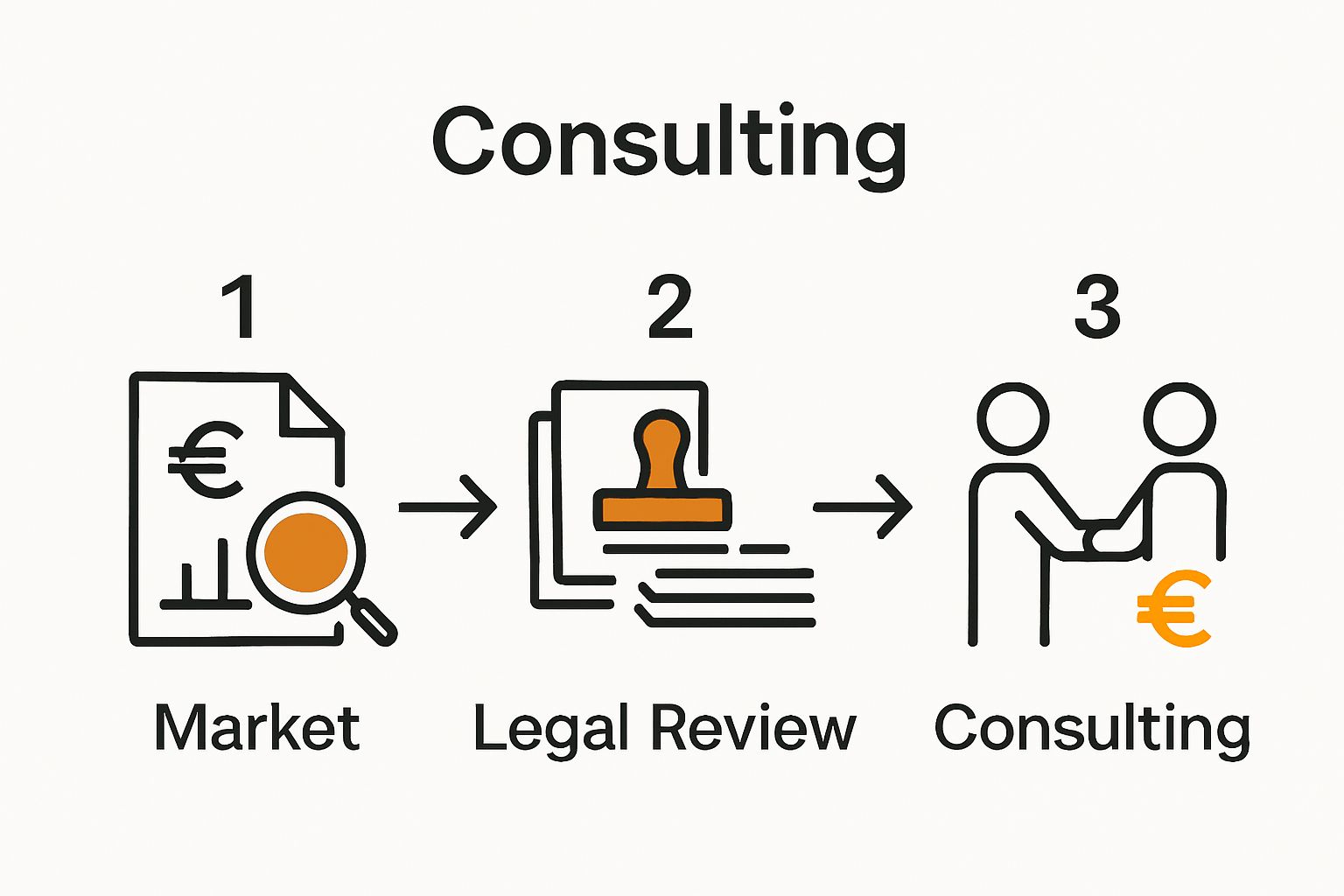
Step 3: Consult with Local Financial Experts
Engaging with local financial experts represents a pivotal moment in mitigating real estate investment risks in Portugal. These professionals serve as critical navigators through the complex landscape of international property investment, offering insights that extend far beyond basic market research.
Selecting the right financial advisor is fundamental to your investment success. Look for professionals with demonstrable experience in international real estate transactions, specifically those who understand the nuanced Portuguese market. According to national consumer credit regulations, working with licensed local financial advisors becomes essential in deciphering regional investment complexities.
Your consultation should comprehensively cover multiple financial dimensions. Discuss detailed investment strategies that align with your risk tolerance, focusing on portfolio diversification, potential tax implications, and long-term wealth preservation goals. Professional advisors can help you understand currency exchange risks, potential financing options, and strategic investment structures that optimize your financial position.
Key verification points for a successful expert consultation include:
Comprehensive review of your current investment portfolio
Detailed analysis of potential Portuguese real estate investment scenarios
Clear understanding of tax optimization strategies
Identification of potential financial risks and mitigation approaches
Beyond traditional financial advice, seek experts who offer holistic guidance. The most valuable consultants will provide contextual insights about market trends, potential regulatory changes, and strategic investment timing. They should help you develop a nuanced understanding of how your Portuguese real estate investment fits into your broader global financial strategy. By approaching this consultation as a collaborative dialogue, you’ll gain not just advice, but a strategic partnership that can significantly enhance your investment decision-making process.
Step 4: Diversify Investments and Strategies
Diversification stands as the cornerstone of intelligent real estate investment in Portugal, transforming potential vulnerability into strategic resilience. Smart investors recognize that spreading investment across multiple assets and strategies dramatically reduces overall risk exposure and creates multiple potential revenue streams.
Strategic diversification extends far beyond simply purchasing properties in different locations. Explore our comprehensive investment funds portfolio to understand the nuanced approaches available to sophisticated investors. According to academic research on Portuguese real estate investment, combining residential, commercial, and tourism-related properties can significantly mitigate potential market fluctuations.
Consider constructing a multifaceted investment approach that includes various property types, investment vehicles, and geographical regions within Portugal. This might involve allocating capital across different municipal zones, mixing long-term residential investments with short-term tourism rentals, and incorporating regulated investment funds that provide additional layers of financial protection. Each investment segment should complement the others, creating a balanced portfolio that can withstand potential market volatilities.
Key verification points for successful diversification include:
Balanced allocation across multiple property types and investment vehicles
Geographical distribution of investments across different Portuguese regions
Mix of direct property ownership and regulated investment funds
Clear documentation of investment strategy and risk management approach
Successful diversification requires continuous monitoring and strategic adjustments. Regularly reassess your portfolio’s performance, remain flexible in your approach, and be prepared to rebalance investments as market conditions evolve. By maintaining a dynamic, well-researched investment strategy, you transform potential risks into calculated opportunities for sustainable wealth generation in the Portuguese real estate market.
Below is a checklist table summarizing the key verification points for each main step in the investment process to help organize your due diligence.
Step | Key Verification Points |
Market Research | Comparative price analysis, local supply and demand, economic and regulatory risks, emerging opportunities |
Legal Frameworks | Review foreign investment property laws, legal documents, tax implications, residency/investment permits |
Consult Financial Experts | Portfolio review, scenario analysis, tax optimization, risk mitigation approaches |
Diversify Investments | Allocation across types and vehicles, geographic spread, mix of ownership/funds, documented strategy |
Property Management | Review company credentials, fee and service understanding, compliance, transparent communication |
Performance Monitoring | Quarterly reviews, compare against projections, market value assessment, operational cost evaluation |
Step 5: Assess Property Management Options
Property management represents a critical layer of risk mitigation for international real estate investors in Portugal. Selecting the right management strategy can transform a potentially complex investment into a streamlined, profitable asset that operates smoothly without constant personal intervention.
Professional property management goes far beyond simple maintenance and tenant selection. According to the Portuguese National Institute of Statistics, urban property management has become increasingly sophisticated, offering investors comprehensive solutions that minimize operational risks. When evaluating management options, focus on finding professionals who understand the nuanced Portuguese real estate market and can provide transparent, comprehensive services.
Your property management assessment should encompass a holistic review of potential service providers. Look for companies with proven track records in managing properties similar to your investment, strong local networks, and advanced technological capabilities for reporting and communication. The ideal management partner will offer services that include tenant screening, maintenance coordination, financial reporting, legal compliance, and strategic advice on maximizing rental yields.
Key verification points for successful property management selection include:
Comprehensive review of management company credentials and references
Clear understanding of fee structures and service offerings
Verification of legal and regulatory compliance capabilities
Transparent communication protocols and reporting mechanisms
Beyond traditional management services, seek partners who can provide strategic insights into local market trends, potential property value improvements, and adaptive management strategies. The most effective property management relationships evolve into collaborative partnerships that actively contribute to your investment’s long-term success and risk mitigation strategy.
Step 6: Regularly Monitor and Review Investment Performance
Effective investment management in the Portuguese real estate market demands continuous, strategic performance monitoring. This critical step transforms passive ownership into an active, responsive investment approach that can rapidly adapt to changing market conditions and emerging opportunities.
Performance monitoring is not a one-time event but an ongoing strategic process. Develop a systematic approach to tracking your investment’s financial and operational metrics, focusing on key performance indicators that provide comprehensive insights into your portfolio’s health. This involves creating a robust reporting framework that captures rental yields, property valuation trends, maintenance expenses, and comparative market analysis.
Utilize advanced digital tools and platforms that offer real-time tracking and comprehensive financial reporting. These technologies enable investors to receive instant updates on market shifts, potential risk factors, and performance benchmarks. Regular quarterly reviews should include a holistic assessment of your investment’s alignment with original strategic objectives, considering both micro-level property performance and broader macroeconomic trends affecting the Portuguese real estate market.
Key verification points for successful investment performance monitoring include:
Quarterly comprehensive financial and operational performance review
Comparison of actual performance against initial investment projections
Assessment of market value and potential appreciation or depreciation
Evaluation of ongoing maintenance and operational costs
Successful investment management requires intellectual humility and flexibility. Be prepared to make data-driven adjustments to your strategy, whether that means repositioning assets, modifying management approaches, or exploring alternative investment vehicles. By maintaining a dynamic, informed approach to performance monitoring, you transform potential risks into opportunities for sustained financial growth in the Portuguese real estate market.

Take Control of Real Estate Risk with Proven Investment Strategies
Are you concerned about the hidden complexities and legal uncertainties of the Portuguese real estate market? The article highlights the real anxiety that comes from trying to navigate regulatory changes, fluctuating property values, and operational pitfalls. If your priority is stable EU residency, wealth preservation, and peace of mind for your family, you need smarter options. At MFG Consultants, we understand how challenging it can be to manage due diligence and ongoing asset monitoring, especially when so much is at stake. Our specialized approach removes the worries of direct property investment by offering fully compliant, diversified financial solutions that match your goals and risk profile.

Stop letting regulatory and market risks dictate your investment journey. Choose transparency, due diligence, and expert support every step of the way. Discover how you can secure residency and growth with a curated investment fund portfolio or explore our exclusive real estate advisory for Portugal to make confident decisions. The next step toward safety, diversification, and long-term value is just one click away. Visit MFG Consultants now for a confidential assessment and actionable plan tailored just for you.
Frequently Asked Questions
How can I effectively research the real estate market to mitigate risks?
Begin by accessing credible market reports and analyzing regional variations in property prices and rental yields. Focus on gathering data from areas of interest, ensuring you cover key indicators such as average property prices and economic growth within the next 30 days.
What legal aspects should I consider to avoid risks in my property investment?
Review the foreign investment regulations and ensure compliance with tax structures and ownership restrictions. Consult with local real estate attorneys to clarify any documentation requirements and legal obligations before proceeding with any investments.
How do I choose the right financial expert to guide my property investment decisions?
Select a financial advisor with experience in international real estate, specifically who understands the local market nuances. Schedule a consultation to discuss comprehensive investment strategies that align with your risk tolerance and financial goals within the next few weeks.
What are the best diversification strategies for real estate investments?
Diversify your investments by exploring various property types and geographical areas, rather than concentrating on a single asset. Aim to balance your portfolio across residential, commercial, and short-term rental properties within six months to reduce overall risk exposure.
How can I effectively manage my properties to minimize operational risks?
Engage professional property management services that offer comprehensive support, including tenant screening and maintenance coordination. Evaluate potential management companies by reviewing their track record and service offerings to find a suitable partner that fits your investment strategy.
What key performance indicators should I monitor for my real estate investments?
Track metrics such as rental yields, property valuation trends, and maintenance expenses to assess your portfolio’s health. Set up quarterly reviews to compare actual performance against your initial projections and adjust your strategy based on ongoing market conditions.
Recommended


Comments